Telehealth billing that keeps up with payer rule changes.
Telehealth reimbursement still shifts by payer and state. ClinicBills maintains POS 02 vs POS 10, modifiers 95/93, and audio-only policies so virtual visits pay like they should — including RPM and CCM programs.
Outcomes practices see
Telehealth approval rate
Parity vs in-person payment
Policy update cadence
Where telehealth & virtual care billing breaks
- Wrong place-of-service codes
- Audio-only coverage rollbacks
- Cross-state licensure and billing mismatches
What we focus on
- POS and modifier matrices by payer
- Audio-only vs A/V coding
- RPM / CCM enrollment support
- Quarterly CMS and commercial updates
If your telehealth billing is still running on the rules everyone memorized in 2021, it's costing you money right now. Place-of-service codes, audio-only coverage, and remote-monitoring enrollment rules keep shifting — by payer, and by quarter. Virtual care gets paid when the claim matches this quarter's policy, not the sticky note someone taped to a monitor two years ago.
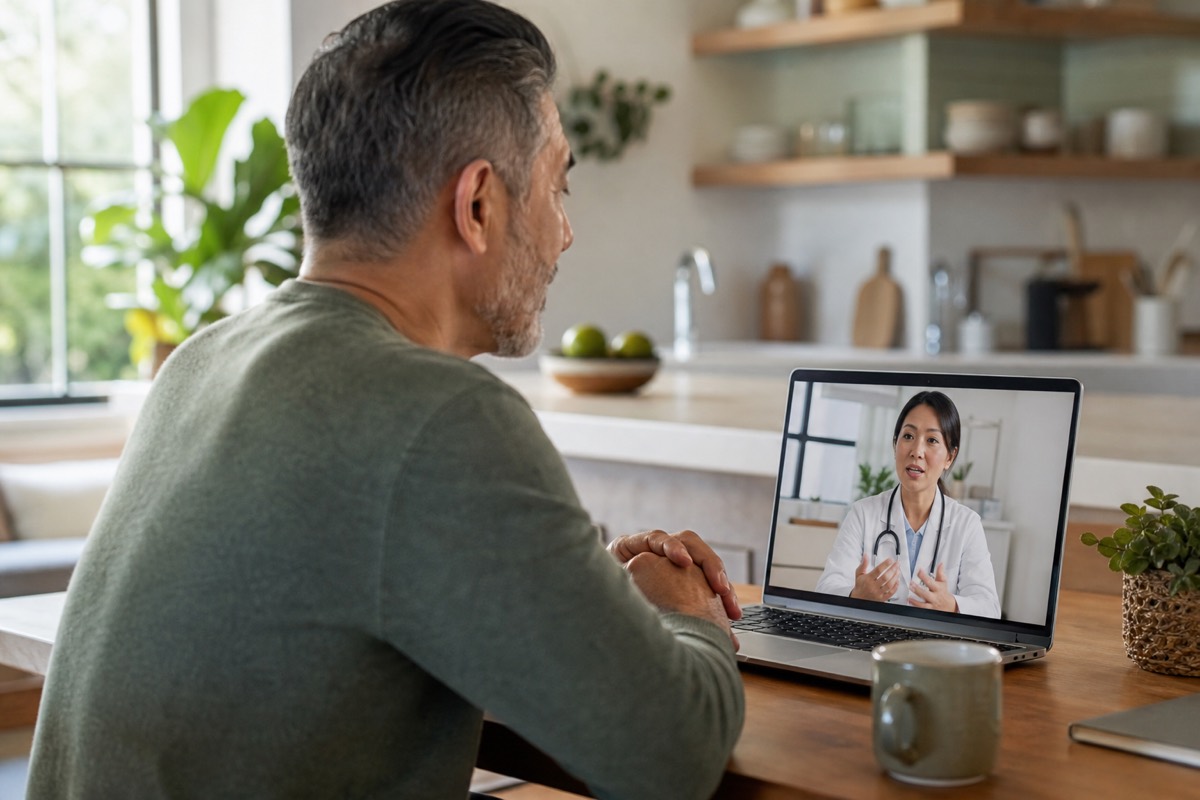
POS 02 vs POS 10 — and why audits care
POS 02 means the patient is not in a telehealth-originating-site facility (patient at home is the usual case under current CMS framing). POS 10 is specifically telehealth provided in the patient's home. Commercial payers do not all mirror CMS. Using POS 11 on a pure virtual visit because "that's our office" is a common audit flag. We map POS by payer and by whether the patient was at home vs another originating site.
Modifier 95 indicates a synchronous telemedicine service via real-time audio and video for codes in Appendix P (and payer analogs). Modifier 93 indicates audio-only synchronous telemedicine when the code and payer allow it. Putting 95 on an audio-only call is how you invent refunds.
Originating site, distant site, and cross-state reality
The distant-site practitioner bills the professional service. An originating-site facility fee (Q3014 in Medicare contexts, when applicable) is only for qualifying originating sites — a patient's home generally does not generate that fee for the billing provider under common Medicare telehealth rules. Cross-state care requires the clinician to be licensed (or covered by a compact/exception) where the patient is located. Billing a Texas Medicaid plan for a patient sitting in Oklahoma with a Texas-only license is not a coding problem you can modifier away.
- Confirm patient location state at the start of every virtual visit and store it in the note.
- Apply POS 02 or POS 10 per payer instruction — do not default everything to POS 11.
- Use modifier 95 for interactive A/V; use 93 only when audio-only is covered for that CPT and plan.
- Separate RPM/RTM enrollments from standard E&M telehealth so minutes and device days do not collide.
RPM, RTM, and what the minutes must show
Remote physiologic monitoring typically includes 99453 (initial device setup and patient education), 99454 (device supply with daily recording or programmed alert transmissions over a 30-day period meeting day thresholds), and 99457 (first 20 minutes of treatment management time in a month), with add-on time codes when supported. Remote therapeutic monitoring (RTM) uses a parallel family focused on therapy/musculoskeletal and respiratory data. If your staff cannot show device days and management minutes, do not bill the codes.
Parity and payment expectations
Many states require telehealth payment parity with in-person rates for covered services; federal and commercial details still vary. Track allowed amounts for your top telehealth CPTs against in-person equivalents. A telehealth medical billing company should show you where parity holds and where a plan is quietly paying less — then appeal with the contract or state rule in hand. Aim for 97%+ clean claims and keep days in A/R under 28 even when half the schedule is virtual.
Store platform, start/stop time, and patient consent for telehealth in the note. When a payer asks for proof of interactive video, you need more than a CPT and a modifier. That documentation habit is what keeps approval rates near 96%+ when audits start sampling virtual E&Ms the same way they sample office visits.
Common questions
Do you only bill telehealth or full RCM too?
Either. Many clients start with telehealth scrubbing and expand to full end-to-end RCM.
Related services
Medical Coding (ICD-10 / CPT / HCPCS)
AAPC-certified coders. Modifier-perfect. Audit-ready every day.
Learn moreTelehealth & Virtual Care Billing
POS 02, POS 10, modifier 95 — we know the rules so you don't have to.
Learn moreCompliance & HIPAA Audits
Quiet confidence that you'd pass an audit tomorrow.
Learn more